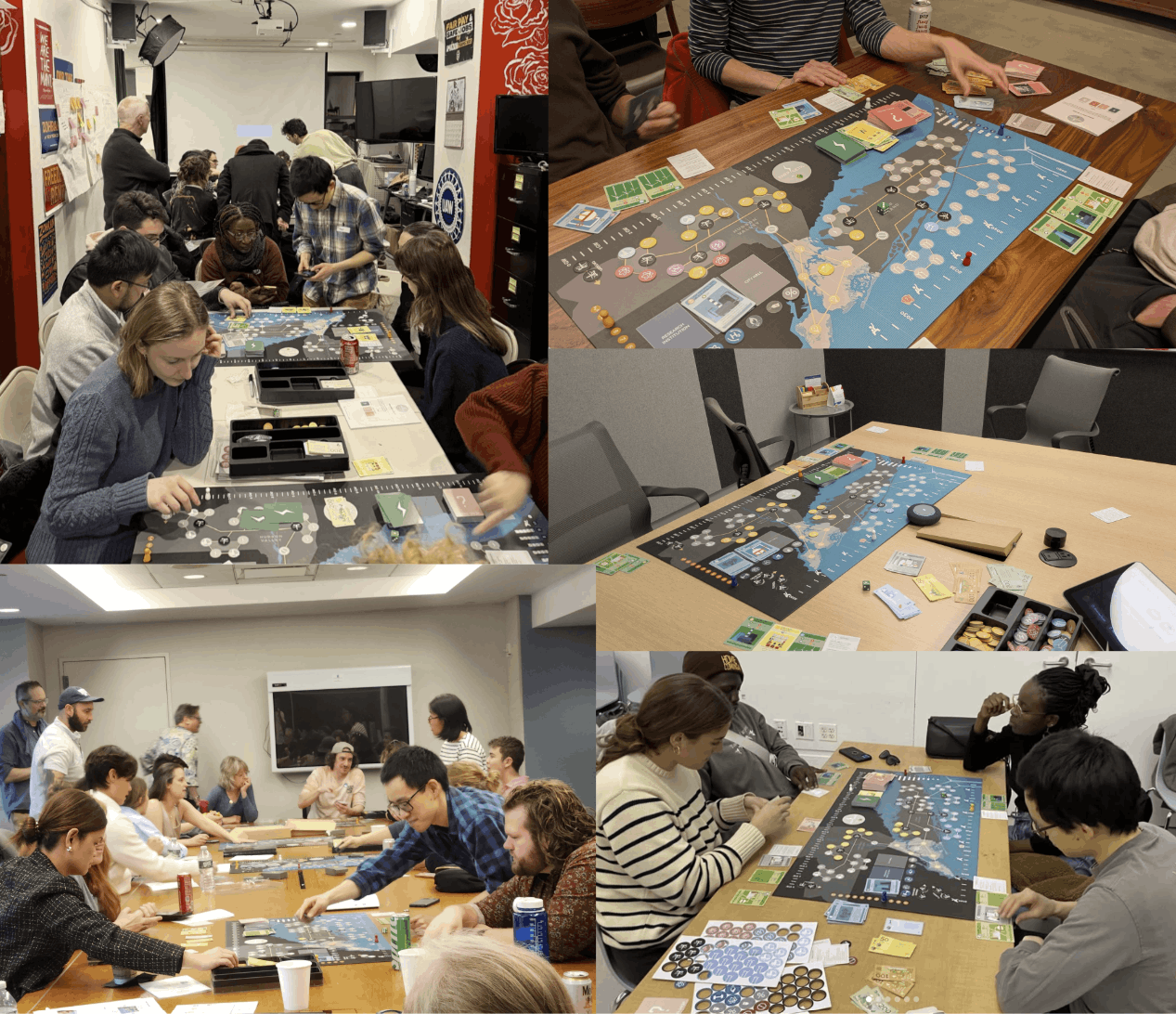
Jekyll2026-07-26T20:10:15+00:00http://elbertgong.github.io/feed.xmlElbert Gong BlogElbert Gong piano musicElbert GongEnergetic2026-07-26T08:00:00+00:002026-07-26T08:00:00+00:00http://elbertgong.github.io/energeticSince moving to NYC last year, I’ve gotten really into this board game.
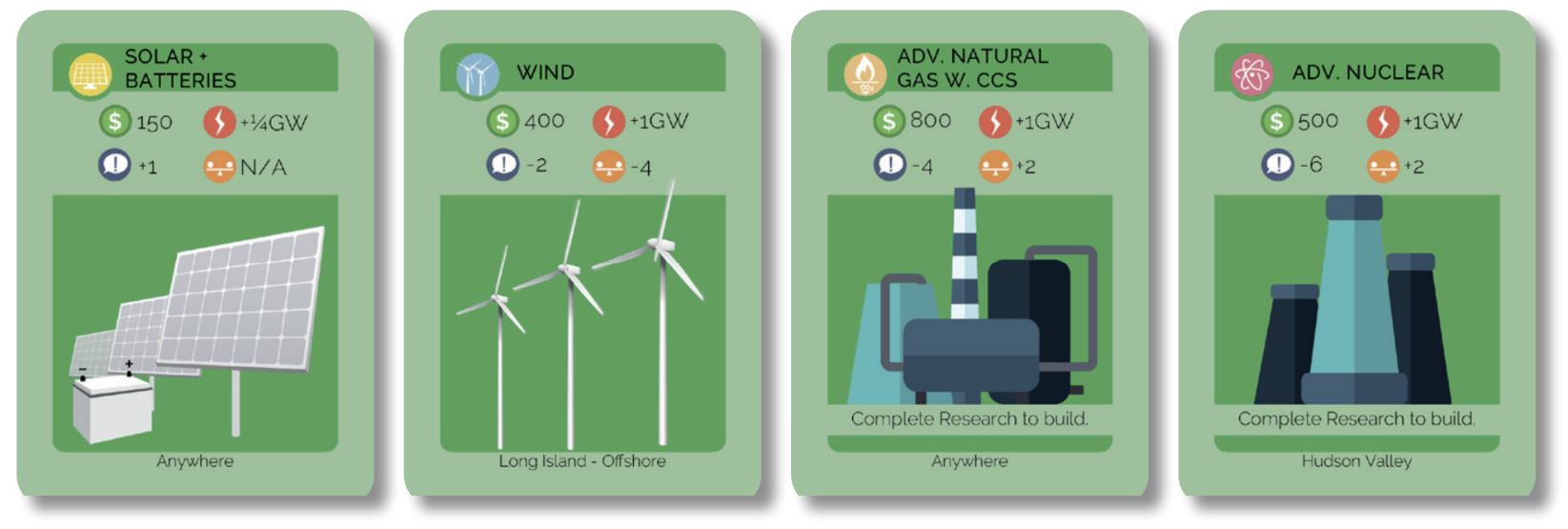
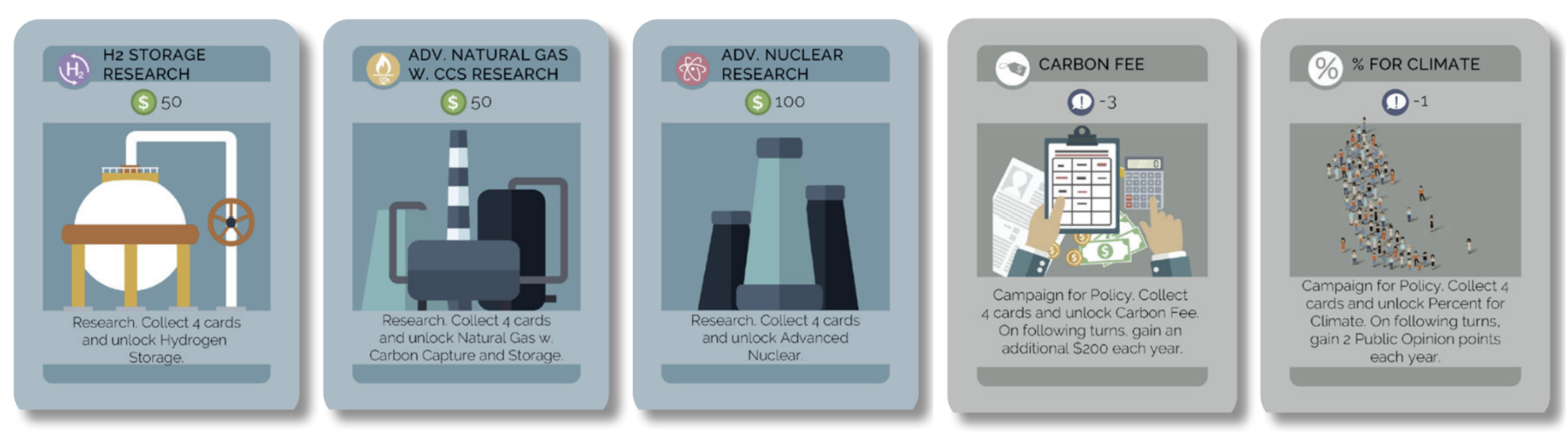
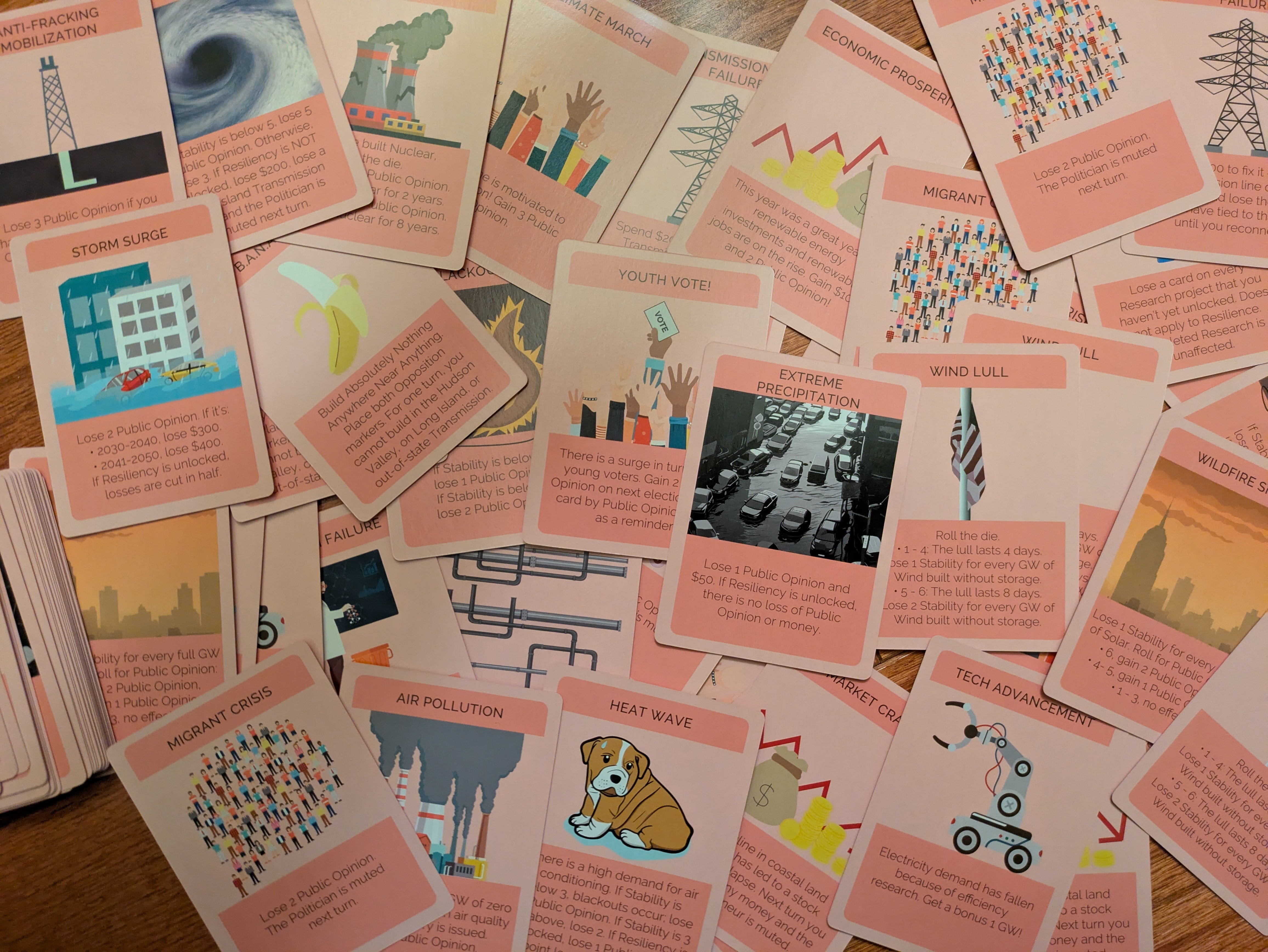
The name of the game is Energetic. It’s a clean-energy-themed collaborative board game where the goal is to build 16 Gigawatts of clean energy by the year 2035. Each year, you draw action cards and spend money to place infrastructure tokens, such as solar, wind, and transmission, on the board. At the same time, you have to manage (a) the budget, (b) the grid stability, and (c) public opinion– all of which are closely intertwined. For instance, if you build unpopular infrastructure that tanks your public opinion, you might lose the next election and get your budget cut in half!
If you’re like me, you’ve read about wind or solar or whatever in the news, but you lack foundational intuition of how the pieces of the puzzle fit together. Then when you play the game, you subconsciously begin to knit together disparate concepts into a more cohesive picture. The game forces you to think at the systems-level. If we build this, how does it affect that? If we do that, how does it affect this other thing? What are our options? What are our constraints? What are our strategies?
Like, how do solar and wind and nuclear and hydro stack up against each other?
What research and policy levers can we pull (or not pull)?
What else can go wrong?
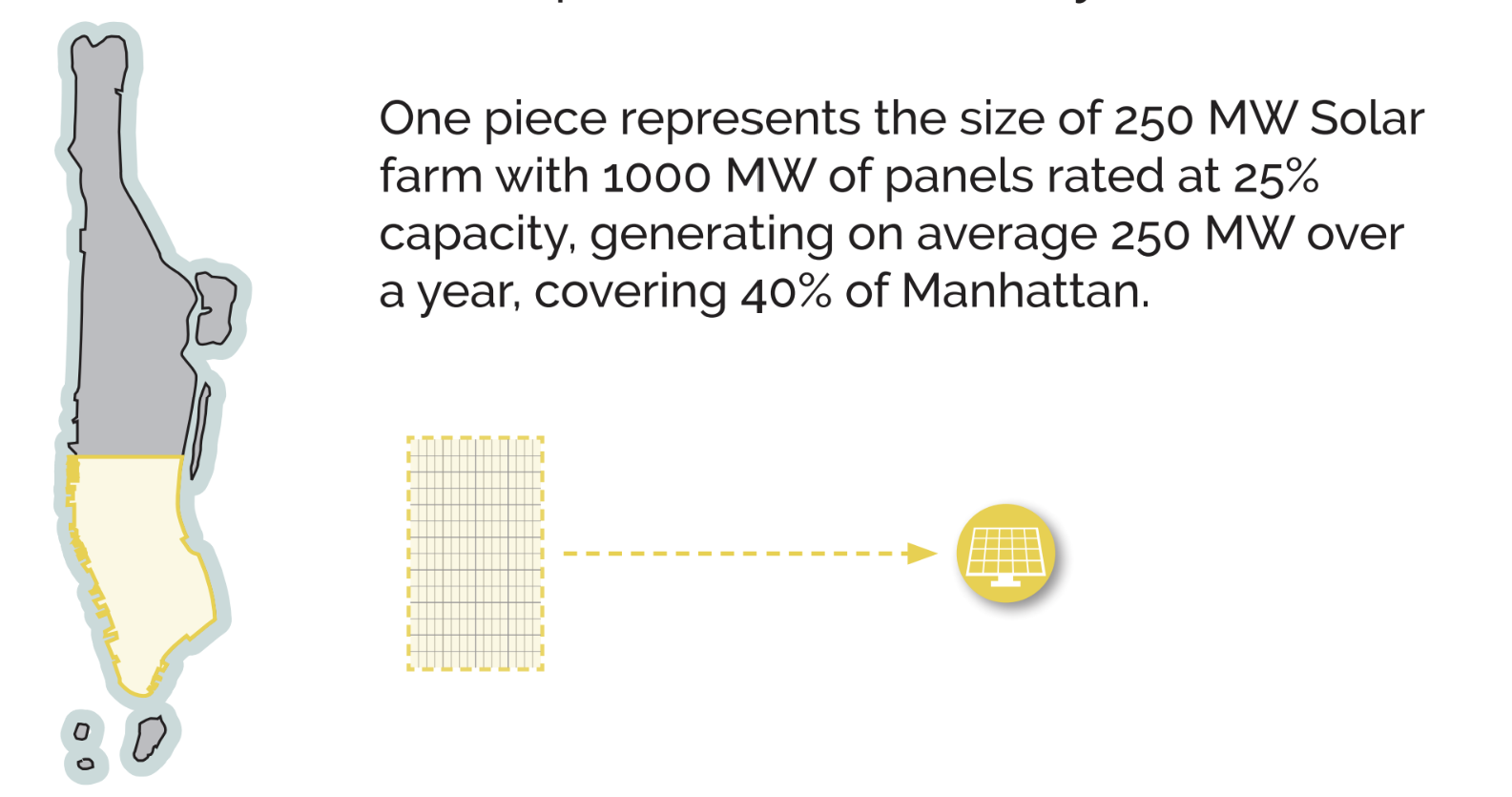
And how do we wrap our heads around the scale of it all? What is a Gigawatt, really? What does a Gigawatt feel like?
The goal of the game is to build 16 Gigawatts, which, divided by 8 million New Yorkers, works out to 2 kilowatts per person, which the UN considers “a sustainable level of power consumption.” That may seem low, given that today’s middle-class US citizens use 4 kW on average.1 But even 16 GW is a conservative estimate that “assumes a significant reduction in power demand through behavioral change and energy efficiency.”2
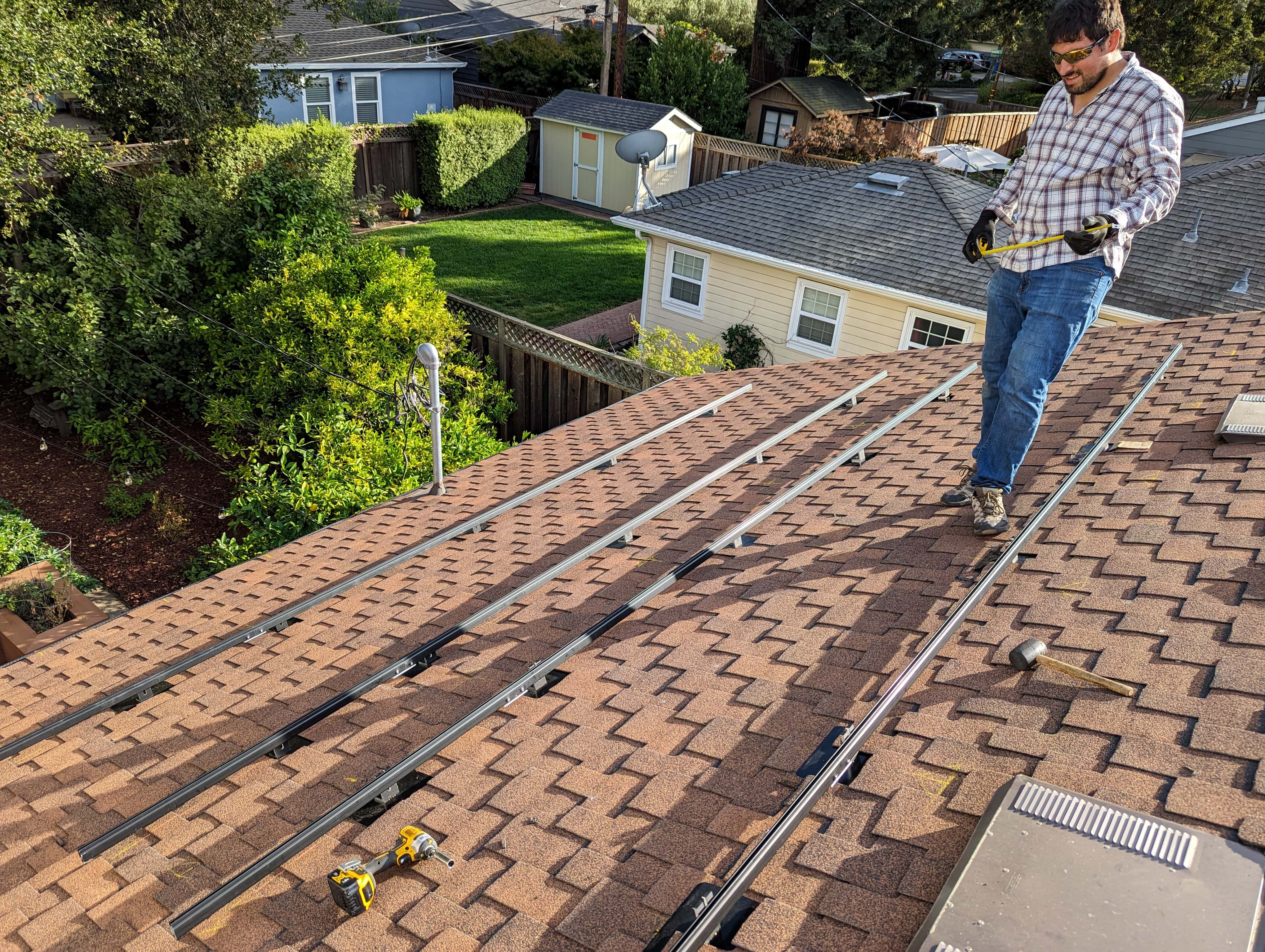
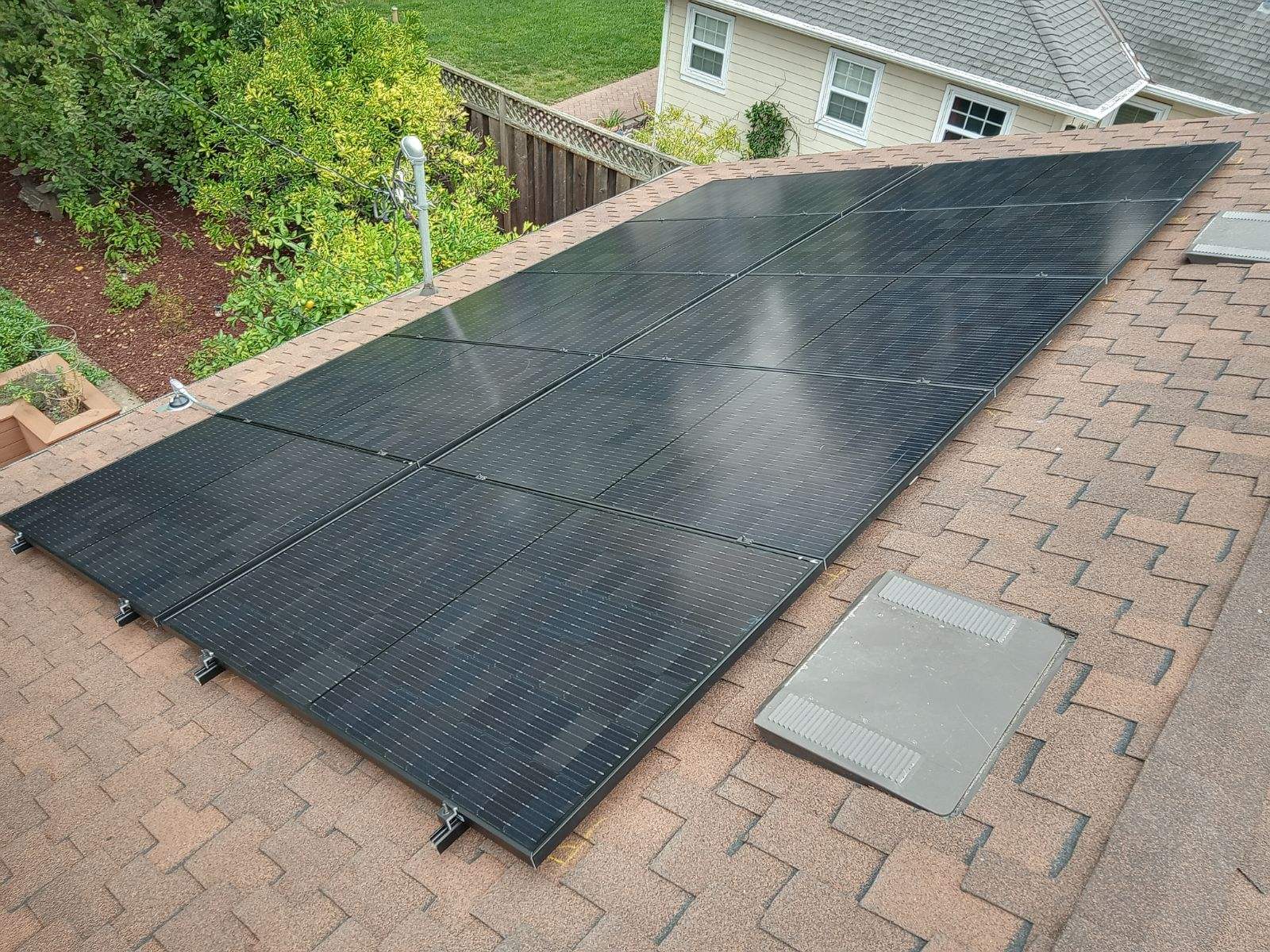
I once spent a day in 2022 installing solar panels on a rooftop with 3 other people. It took us 6 hours to install 10 panels, which worked out to like 3 kilowatts. Thinking about that day out in the sun and all the labor and love that went into those three kilowatts, and then looking again at the diagram above, I feel the diagram more viscerally.
The game has a steep learning curve. You may be a bit confused as you stumble through the first couple turns, but by the second and third hour of play, you’ll be off and running and having a good time. It mirrors real life in that way– initial progress seems impossible and your targets seem hopelessly out of reach, but if you invest early in research + policy + infrastructure, the benefits compound over time and kick off a virtuous cycle. For example, if you play multiple infrastructure tokens in a region, you unlock a “cluster benefit”, which improves the public-opinion rating of future infrastructure. As you unlock more and more benefits, you begin to see an exponential takeoff on the board. But at the same time, your problems get exponentially worse– natural disasters, market crashes, pandemics (all represented by red “random event” cards which increase in frequency after the year 2031). It feels both incredibly pessimistic and incredibly optimistic, which is both thrilling and head-spinning. You get the sensation of stepping outside of yourself and confronting what the city and the world will look like over the next 30 years. And even refracted through the lens of a board game, the size and scale of that are awesome and terrifying to behold.
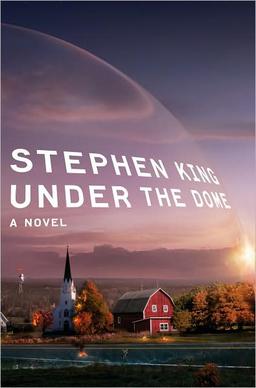
There’s this Stephen King novel, “Under The Dome”, in which aliens place an impenetrable transparent dome over a suburban town,3 and social structures immediately start breaking down as the town descends into panic.
The climate crisis is going to feel like that. The Earth is our Dome. We are at its mercy. We do not yet know how to control it; we do not yet know how to escape it. If things go off the rails, it is we who will perish, not the Earth.
This latent panic pervades our culture. We live anxious, unfocused lives, and we know something feels wrong, but it’s hard to put into words. It’s a simmering sort of “quiet desperation”, as Thoreau put it:4
The mass of men lead lives of quiet desperation… A stereotyped but unconscious despair is concealed even under what are called the games and amusements of mankind. There is no play in them, for this comes after work. But it is a characteristic of wisdom not to do desperate things..
I heard this phrase “quiet desperation” a couple months ago at a retreat in Connecticut. It really struck me, as it perfectly captured the way I’ve been feeling for years. Since 2017, I’ve often been too focused on myself– my grades, my resume, my career trajectory relative to my peers, my various physical and emotional needs.
I’m a grinder. I grind because I worry all night.. All the threats to me and to, um, my division and my physical body.5
We cannot grind our way out of the metacrisis. “When we are stressed, overwhelmed, and running on empty, our capacity for long-term, planet-centered thinking completely disappears.”6 We must rediscover the feeling of being connected to something larger than oneself, like a wave in the ocean.
How can we provoke this feeling?
A psychedelic trip, maybe. Or the birth of a child. A close brush with death. Looking at the stars on a cloudless night. Or (as Ryan Kemp put it during the retreat) “the joyful struggle of touching something real.”
Some day, you’ll be laying on the grass on a quiet day, and you’ll look up at the open sky. You’ll sigh deeply, and the muscles in your shoulders will loosen. You’ll think about how little control you have over it all. You’ll feel the quiet desperation fade out of your body, leaving behind a quiet clarity.
I hope to use this board game as a gateway to invite people into this feeling.
On August 20, I’ll be hosting a game night. The venue will be anew.world, a lovely event space in the West Village in Manhattan.
I would love nothing more than to have over a group of friends and strangers, introduce them to each other, and enjoy a casual board game over some afternoon tea and snacks. Consider yourself invited!
]]>Elbert GongWednesday2026-03-22T08:00:00+00:002026-03-22T08:00:00+00:00http://elbertgong.github.io/wednesdayWednesday was pretty interesting. Let me tell you about it:
8:30 am
Yawwwnn, should I go exercise or should I lie in bed…?
9:30 am
I ran to Pershing field pool and swam laps for an hour.
11 am
Ubered back home, then took the Path train to West Village for a quick lunch.
1 pm
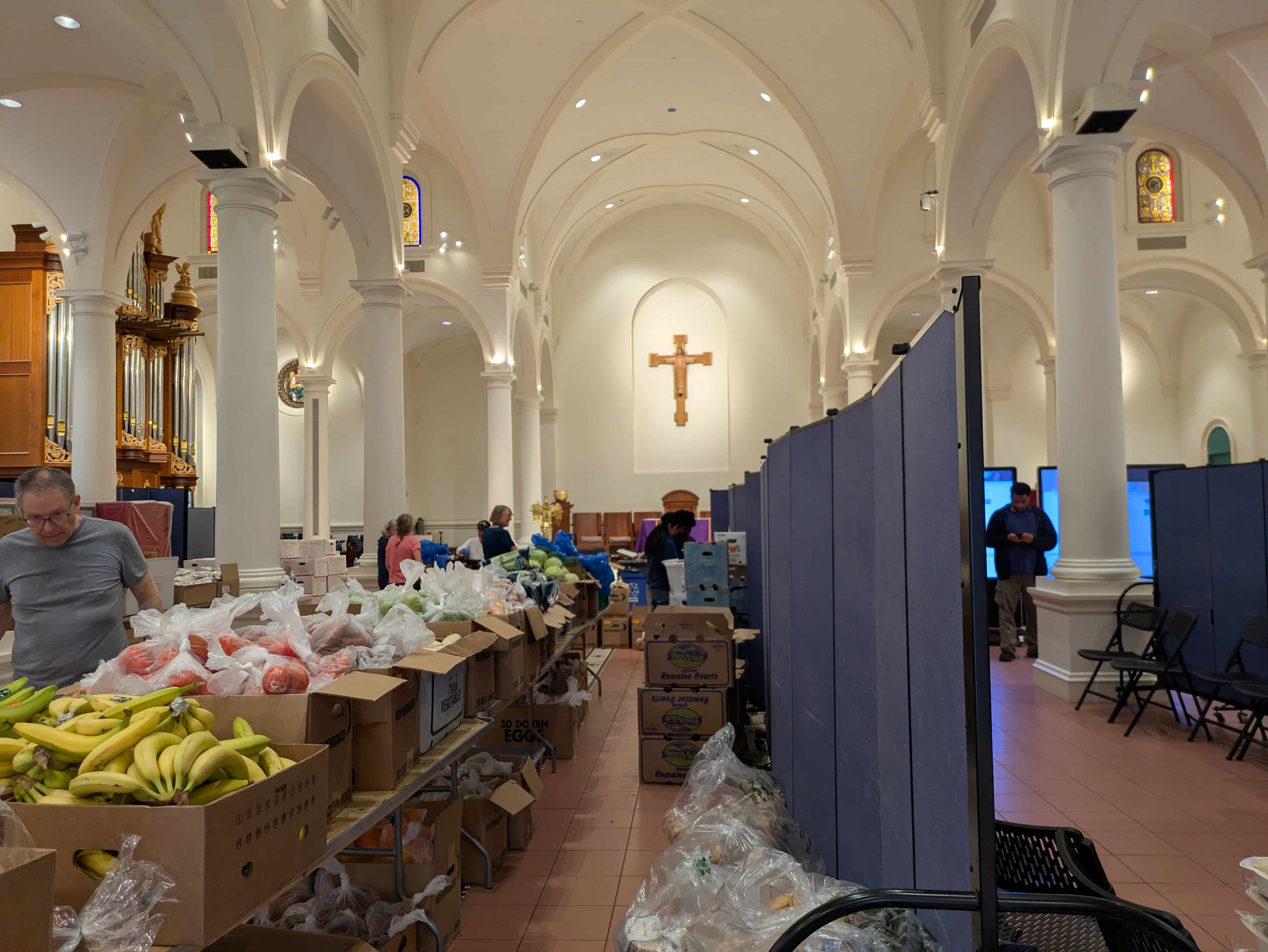
I got a call from Holy Apostles Food Bank that they were looking for last-minute volunteers. I went, and it was surprisingly fun. You’re basically serving clients at a food bank– you take their orders on an electronic kiosk, pack all of their produce and meats and grains and dairy into three bags, and help them load it into their pushcarts. (Bananas and eggs on top!)
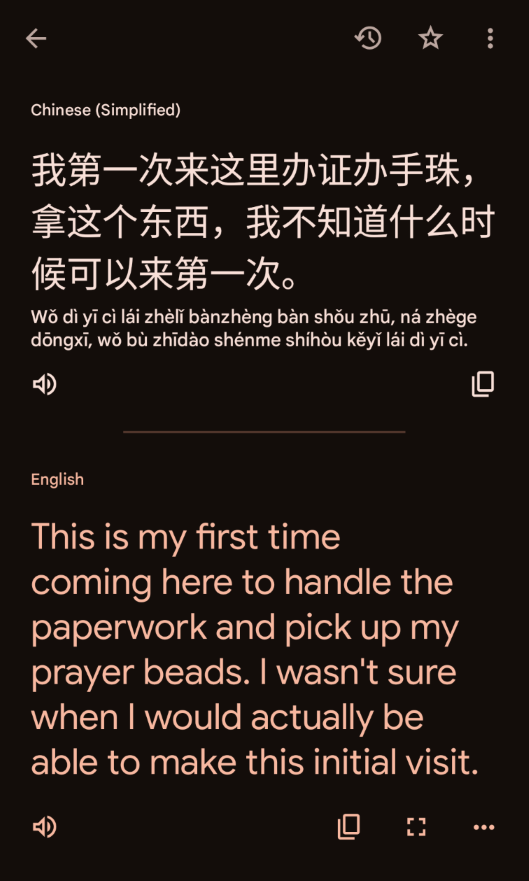
There are hundreds of clients, and you’re pretty much going nonstop, at full speed, for an hour and a half. By 1:30 pm the parish hall is full of commotion and chatter– clients are looking for their missing bananas, or they want this brand of cookies instead of that brand, or they get antsy thinking that the computer system has dropped their order. Some clients speak very little English, so I, as the resident Chinese volunteer, tried my best to keep up with their Mandarin, but my speaking skills were terribly rusty. 🤣 I spent 7 minutes trying to translate one question between a particular client and my supervisor, and I eventually gave up and had them shout their question into Google Translate.
It reminded me of when I tried to join a Chinese choir last year, and I could only understand 80% of what was said at rehearsal (and 50% of what was said at dinner).
But it felt really nice to step into a foreign community and do a simple and valuable task well for a few hours. I’d love to grab a couple of folks and go back another time.
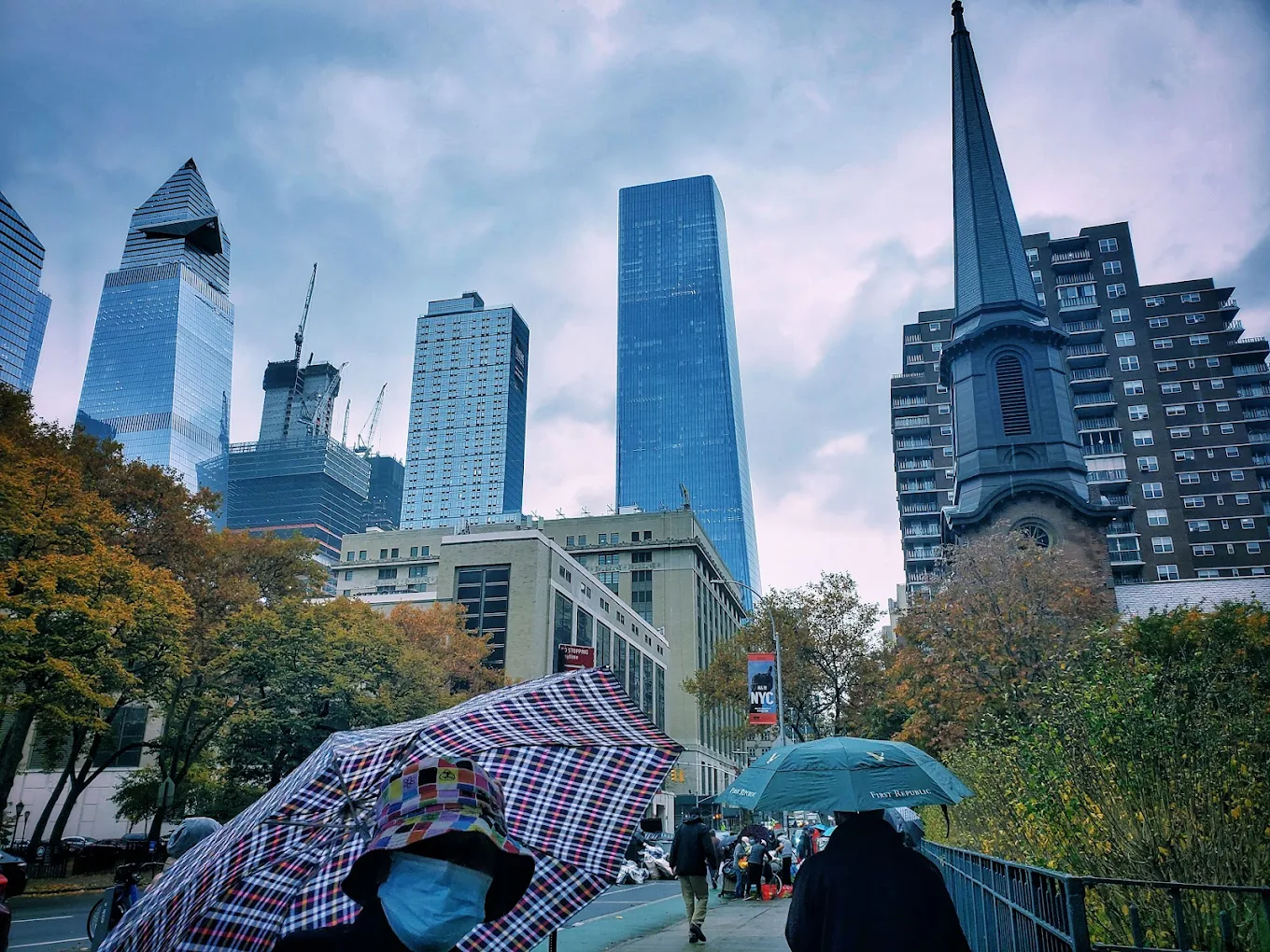
As I was leaving, I was struck by the contrast in the skyline: a two story brick church in a patch of garden nestled between glass skyscrapers, with Hudson Yards on one side and the Empire State building on the other. It was a reminder that, even in the middle of the richest city in the world, there is so much more food insecurity than meets the eye.
Went to the office, took a nap, and answered some emails.
6 pm
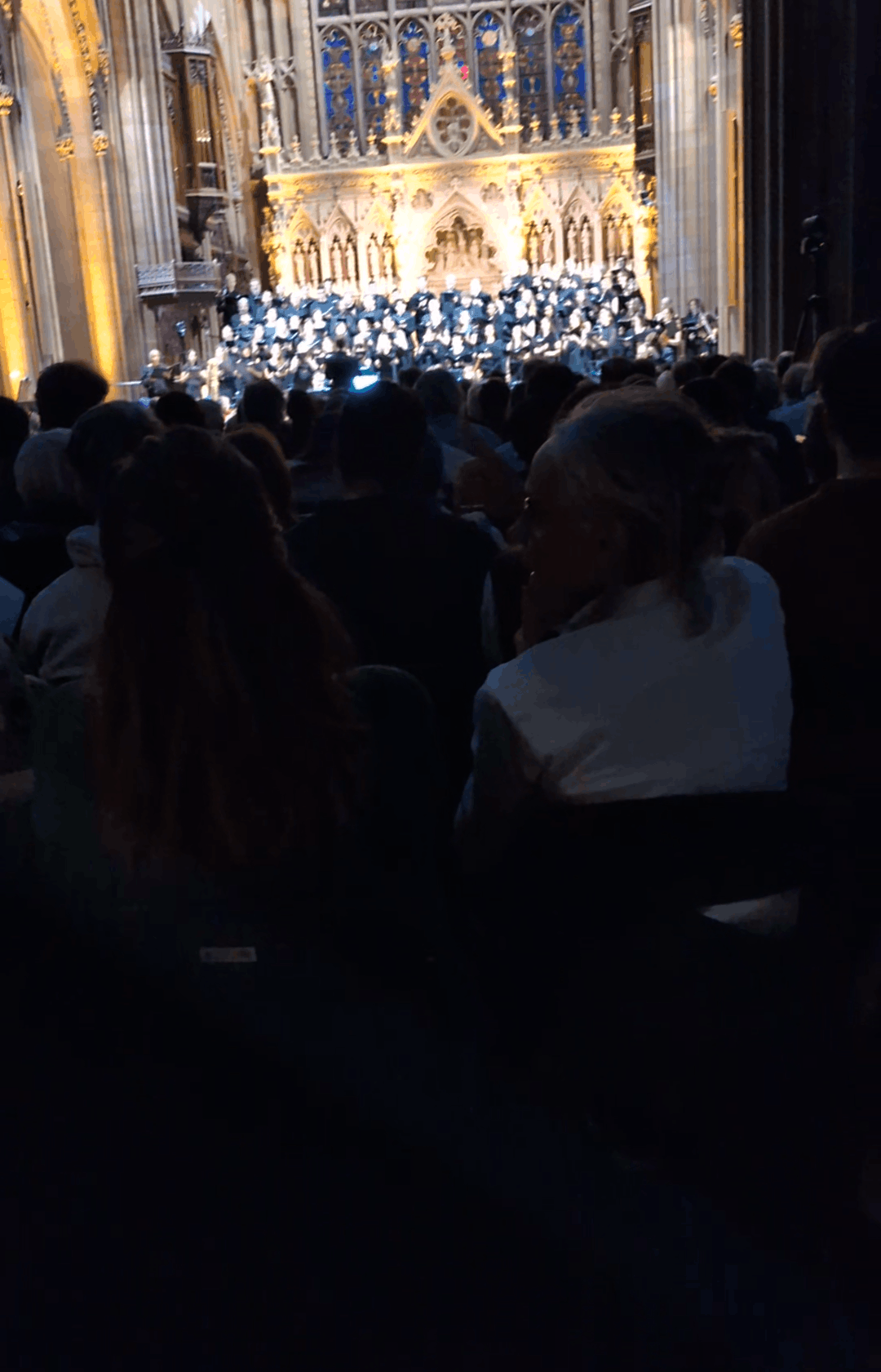
Ate a quick dinner and then took the subway down to Trinity Church to watch Brahms Requiem. Since it was a free concert, I had planned to arrive 30 minutes early to guarantee a seat. Yet somehow I arrived 30 minutes… late. All the seats were gone, it was standing room only, and I spent the second movement thinking to myself Gosh, Elbert, your head is so full of grass. What are we ever going to do with you?
For all flesh is as grass, and all the glory of man as the flower of grass. The grass withereth, and the flower thereof falleth away.
The concert was an absolutely tidal acoustic experience. This was the biggest choir I’d seen in years, and the chamber orchestra was augmented by a very large organ laying down Earth-shaking pedal tones. I was standing in the very back of the parish hall with waves of sound washing over me. A few sharp sounds dramatically pierced through this ocean of resonance– most notably the timpani hits at the end of the third movement, and the crisp consonants of the baritone soloist (which were crystal clear even from the back of the hall). The baritone was practically spitting those consonants. It was very German and I loved it.
Herr, lehre doch mich, daß ein Ende mit mir haben muß, und mein Leben ein Ziel hat, und ich davon muß! und ich davon muß.
It reaffirmed my belief in the magic of live concerts. I had listened to this piece a hundred times through headphones while doing laundry. But in person, the contrasting timbres of the different instrument groups were so much more vivid. It felt much more spiritual.
Also, since this was New York, it seemed to me like almost every person in the audience had sung Brahms Requiem before. 🤣 Even back in the “cheap” seats, folks were mouthing along to the words and taking out their phones to record the exciting part in the sixth movement, like it was Coachella.
7:30 pm
After the concert, I tried to find someone to socialize with, but as I did not know a single soul in the choir or the orchestra or the audience, I went to the bathroom instead. (This is my go-to move as an introvert.)
I loitered around in Trinity commons, answered a few emails, and took the LIRR to Queens.
I got a text from my childhood piano teacher, which was heartwarming.
9:30 pm
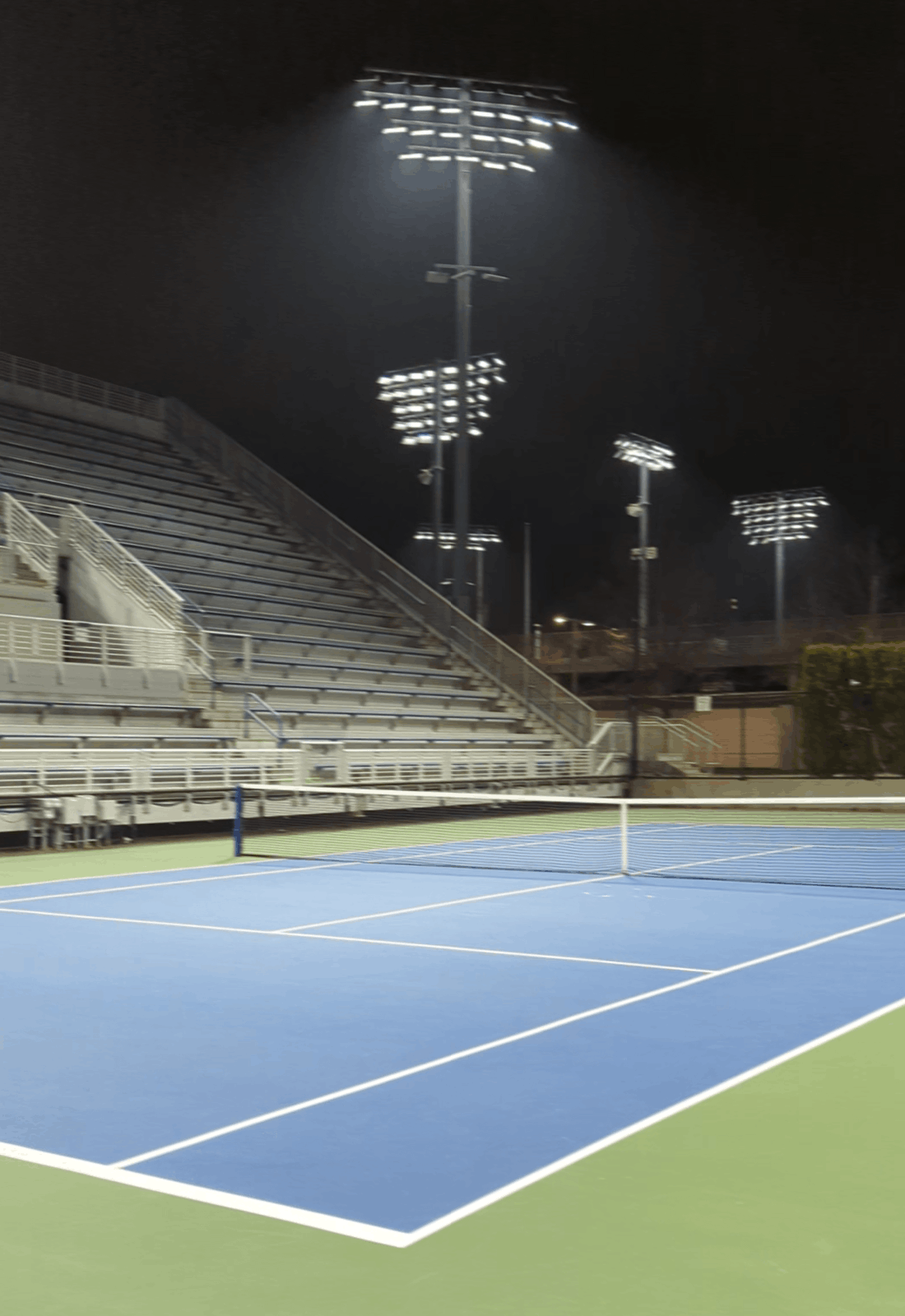
Played tennis at the Billie Jean King National Tennis Center. The BJK NTC is a big deal; it’s the home of the US Open and the world’s biggest tennis stadium. I was booked for Court 7, the same court where, a decade earlier, I watched teenage phenom Denis Shapovalov make his US Open debut.
It’s wild that they allow regular old chuckers to play on these hallowed courts.
Unfortunately it began raining after 15 minutes. My stomach lurched at the thought of cutting it short after having traveling 1+ hours to get there. But (thank god!) the staff gave us a refund and we got to play out the rest of our session indoors.
Finding tennis court time in New York City is comically difficult. The BJK NTC online court reservations open up 48 hours in advance, and when they do, the open slots disappear faster than a guppy in a piranha tank. If you try to book even a second late, they’ll all be claimed. You have to click at exactly 48 hours (plus 500 milliseconds or so to account for network latency)– that way, you’re only competing against the other piranhas. It’s crazy. I’ve heard rumors of people writing click bots. Perhaps someday somebody will build an underground fiber-optic cable directly from their desktop to the NTC’s servers, like the Hummingbird Project.
This system design is highly unfortunate– if you’re not “in the know”, you have no chance. It’s unintentionally gatekeepy. NYC is not without its upsides, but if you value easy access to tennis courts, NYC is not the place for you. Try literally anywhere else in the country.
11 pm
I took the LIRR and Path train back home.
By the time I got out at Hoboken, it was pouring. I had no umbrella, so I ran. As I watched lightning arc over the downtown Manhattan skyline and rain pummel the choppy Hudson waters, I felt like I was in a Percy Jackson movie.
And then I saw something truly disturbing. A guy was collapsed on the boardwalk next to his overturned bike. Another guy was trying to help him like, “Sir? Sir? Can you hear me? It’s pouring rain.” The guy was unresponsive and moaning pathetically.
I was running and tired and it was midnight and I don’t know what I could’ve even done. So I kept running. But I felt shook.
A few minutes later, I encountered a whimpering lost dog outside the elevator on the 17th floor. Still in a daze, I beckoned him back into the elevator and took him down to the front desk. He was shaking (I don’t know whether from fear or cold), but luckily the front desk guy recognized him and held him until his panicked owner arrived a few minutes later.
I took the elevator back up, showered, and went to sleep. But I could not sleep well. My thoughts were racing and I woke up several times. So I decided to write this blog post to try to digest everything that happened that day.
This is New York.
In a single day, you’re exposed to the full spectrum of human experience; the good, the bad, and the ugly. You witness beautiful music that raises your spirits, and you confront the immensity of the food insecurity crisis. You’re surrounded by incredible people and you’re also incredibly lonely. You feel inspired to do good productive work, and you also spend hours checking email. You’re having more cool experiences than ever, yet you feel more intense FOMO than ever.
It’s like somebody has turned the “Life” dial all the way up to 11.
]]>Elbert GongTrying to write more2026-01-01T08:00:00+00:002026-01-01T08:00:00+00:00http://elbertgong.github.io/gridIn middle school, my writing always lagged behind my math, but in high school it improved steadily because I wrote a ton of essays and I had great English teachers. I remember Ms Perry having me use a web app, Write or Die, which was hilarious and excellent practice in learning to push through writer’s block. In senior spring, I distinctly remember feeling that I was reaching a newfound level of writing fluency. My thoughts would cascade onto the page in well-formed, flowing sentences, like a jazz improvisation. My fingers could keep up with my brain.
In college, I started taking more math classes and writing less. I achieved flow state a couple times– once in Roberto Unger’s Conduct of Life course– but I was starting to struggle. I’d take a break every five minutes and flop onto my bed, exhausted with the effort of thinking of synonyms for filler words I’d used too many times in a row. My brain was still fast, but my fingers were slow. And pulling all-nighters during finals season didn’t help!
After I left the ivory tower in 2019, I basically stopped writing, aside from very short journal entries and messages. In 2021 I realized that I hadn’t written an essay in ages and that I had lost quite a bit of fluency. I could still write text messages, but I’d spend an hour on an email, which, after pressing send, I’d read back and think, “Ugh, it sounded so much better in my head!” In 2025, I attempted to write a paper for a Stanford civil engineering class. It was like pulling teeth. I kept leaving sentences unfinished. I’d get stuck for 5-10 seconds and frantically jump to the next point while trying to keep the logical structure in my head from collapsing. My brain was still fast, but my fingers were glacial.
I’ve heard it said many times that the average adult’s neuroplasticity starts declining at age 25. However I recently came across an article claiming that the brain stays in “adolescent phase” until it peaks in the early 30s. So, hey, I’ve got time! Apparently I’ve got 3 years left to squeeze every remaining ounce of potential out of my weakening flab of gray matter.
Therefore, my new year’s resolution is to write more. Long form.
Wellll… at least medium form. 🙂
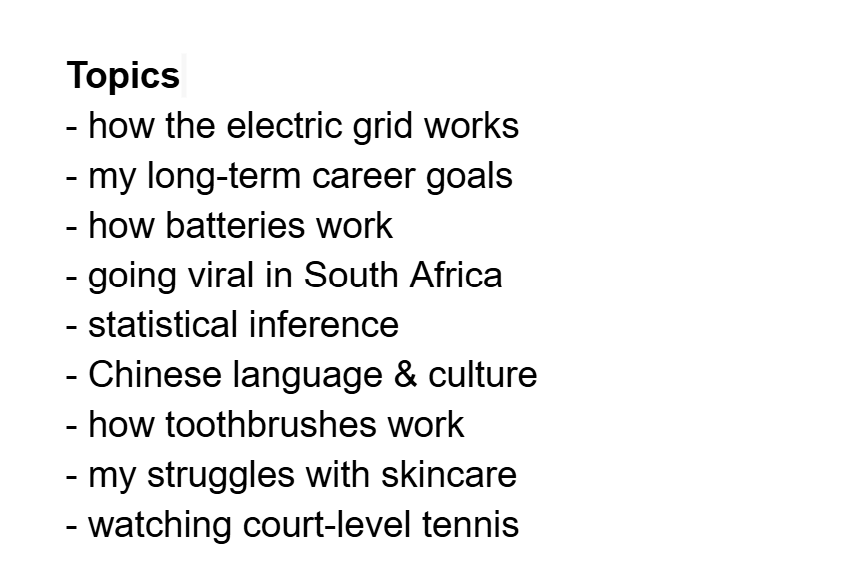
I want to develop a friendly narrative voice. I want my writing to be readable, like good technical documentation, but with a bit of personality showing through. I do not want it to be “good”. (Wanting to be “good” is the enemy of joy.) I just want it to be good enough. Essentially, I want to be able to get my thoughts out without feeling stuck. I’ve accumulated a long list of topics to write about, and I need to relieve this mental and emotional constipation asap.
The list as of Jan 2026.
So let’s get started with item number 1: how the electric grid works. I’ll recap my aforementioned Stanford engineering essay, then I’ll connect that to my broader career journey and goals.
Exploring the grid’s wildfire resilience through Power Systems Analysis
We all know that wildfires are getting worse due to climate change. But wildfires themselves are also making climate change worse. They damage transmission lines, forcing grid operators to either shed load or rely on backup “peaker” plants, which are usually the dirtiest and most expensive sources of power.
The electrical grid exists in a delicate state of balance, and two or three downed power lines can easily throw things out of whack. The necessity of maintaining this state of balance is what makes the electrical grid a different beast from, say, the water system. We can store water in aquifers and control its movement with pumps and valves. But electrical energy, for the most part, is transmitted and consumed at the exact instant it is produced. And we don’t control how much energy goes through this wire versus that wire. There are laws of physics (known as Kirchoff’s laws) that describe how the voltage and current flowing through a system must behave in equilibrium. If anything happens in one corner of the system, it affects the entire system– often in ways that are hard to predict. For example, building a new transmission line can actually make things worse by creating less efficient flow paths. (This is known as Braess’ paradox.)
Utilities need to decide where to build new transmission, distribution, and generation. To do this, they run mathematical simulations. The bread-and-butter model for doing so is known as Optimal Power Flow (OPF).
OPF starts with the power flow equations, which are derived from Kirchoff’s laws (figure 1). We apply some simplifying assumptions to make it easier to solve them1. This gives us a set of constraints. We then add a few more constraints for things like “Don’t let the voltage on this line exceed X, or else it’ll overheat and possibly spark a fire”. Then we define an objective function: the dollar cost of constructing and operating the grid. Our goal is to minimize this cost subject to the constraints. We now have a well-defined optimization problem, and there are efficient techniques to solve it 2.
Figure 1: The OPF equations. As Prof. von Meier says, “You may avert your gaze if the sight of the power flow equations does not spark joy.”
To simulate things going wrong, we do something called Security-Constrained Optimal Power Flow (SCOPF), which essentially solves the same optimization problem, but with the constraint that if k lines go out, that the system stays “feasible”, i.e., that it can still meet consumers’ energy demand.
But which k lines should we consider? (Not all lines are equally important or equally likely to fail.) This is the main contribution of my paper– I incorporate a dataset of historical wildfires to identify the lines most susceptible to fire risk, and I use that to identify the weak points in the grid.
The model was built with a delightful open-source Python tool called PyPSA-USA (Python for Power Systems Analysis). I was very lucky to have randomly bumped into its main developer, Kamran, at a startup pitch night a few months earlier. He helped me learn the lay of the land, pointing out little quirks and debugging tips that saved me hours of struggle. Even so, getting the model up and running was the hardest part of the project for sure. The model was too big for my poor little PC, so I had to tussle with Stanford’s cluster computing environment (the “rice” node was running out of memory so I had to upgrade to a “wheat” node… whatever that means). Even after making several simplifying assumptions and reducing the model size, the optimization job still took 4 hours to run end-to-end.
But once it finished, I could use PyPSA to make some pretty nice graphs, like these:
The first graph is a map of transmission lines colored by wildfire risk. The highest-risk area is the northern Pacific coast. Although eastern Montana has a lot of wildfires too, they don’t show up as strongly in this map because there aren’t many transmission lines there.
The second graph simulates the effect of a fire near the California-Oregon border. The simulated fire touches 18 transmission lines and incurs a huge system cost. Some power is diverted through parallel lines to the east, but consumers in Oregon experience massive outages (the red dots in the graph). Thus, I believe that Oregon is a top-priority area to invest in new power generation.
Limitations
At the end of the day, this is just a class project, and it’s important that I recognize my model’s limitations. So I spend a third of my paper discussing the various ways my model is inadequate:
The power flow equations describe a steady-state equilibrium. They do not model the high-frequency dynamics3 that occur in the seconds after an unplanned disruption. For that, we would need more complex physical equations that model harmonic oscillations in the power waveforms.
My fire model is also a simple steady-state model. It doesn’t capture the dynamic evolution of fire through space and time.
I’m not even considering other important climate risks like heat waves, flash floods, and wind storms.
Most importantly, my grid model isn’t granular enough. There are thousands of transmission lines in the Western US, but because of my computational constraints, I only model 500 lines. (I reduce the number of lines by clustering together nearby grid nodes and pretending that there are only lines between the clusters.) I cannot match the granularity of production-grade models, which run on hyper-specialized optimization software.
The granularity has a significant impact on the model’s accuracy and overall dynamics. In figure 2, I observe a “cliff” when experimenting with a tiny 100-line network. As I take out more and more lines, the system stays relatively stable, until I take out the 76th line, then the power outages skyrocket. This 76th line is like the straw that breaks the camel’s back.
Figure 2: Lost load as a function of number of lines removed. Network size: 50 buses, 100 lines.
When Prof Rajagopal read my paper, he found this the most interesting part. But it’s partially just an artifact of the small model size, as my larger 500-line network doesn’t exhibit as sharp of a cliff.
Figure 3: Lost load as a function of number of lines removed. Network size: 100 buses, 500 lines.
It’s like panning for gold. When you play around with a model for long enough, interesting signals and behaviors are often revealed to be merely fool’s gold. (For another example, at one point, PyPSA told me that the optimal thing to do was to double the number of transmission lines in the US. But politically, that’s simply infeasible, so it’s not a useful result.)
As a practitioner, it’s important to approach your problem with epistemic humility and to understand the limitations of your models. Statistician George Box famously said “All models are wrong, but some are useful.” There are so many ways for a model to be wrong. Extracting the usefulness out of it takes a great deal of patience and reflection.
If there’s anything I take away from this project, it is a slightly better understanding of the mysterious art of mathematical modeling. Modeling is as much an art as a science; it’s about developing taste. It can be practiced in the same way that a young pianist practices scales and arpeggios. It’s not about knowing some fancy mathematical concept4 or knowing every page in the textbook. It’s about mastering the fundamentals: Visualize your data. Test your code. Use linear approximations. Perform sensitivity analyses. Interpret your results in context. This will give you a firm foundation upon which you can layer more complex techniques.
ChatGPT
If there’s anything else I take away from this project, it is a slightly better understanding of how to use AI for research. The last time I took classes in 2019, gen AI was most definitely not a thing. This time around, I was pleasantly surprised by ChatGPT’s ability to:
speed up the initial research phase
find related literature
brainstorm research questions
sanity-check my understanding of core concepts (e.g., “Can power flow model high-frequency harmonic effects or not?”)
handle boilerplate coding tasks
generate visualizations
debug simple issues
Emphasis here on the simple. For complex debugging or conceptual tasks, there’s no way I could have gotten through it all without feedback and mentorship from human experts: Prof Rajagopal, Kamran, and the teaching fellows. Peppering Prof Rajagopal with questions while walking from the classroom to Coupa Café was infinitely more valuable to me than ChatGPT.
Some self-reflection
This project drained me. I was constantly stressed out. I got sick multiple times and started losing my hair. I took a week off from work. And I did an entire two-person project on my own because my partner flaked (a story for another time). This was easily one of the hardest things I did in 2025. And after all that, I ended up with… what? A toy model and a mediocre 5-page paper that, if I had spent twice as much effort, could maybe possibly have been turned into a low-level conference paper?
Looking back on it all, I don’t quite know how to feel. On one hand, I’m proud that I gave it a good solid effort. I proved to myself that I could do a technical side project. On the other hand, I feel paralyzed by the Sisyphean mountain of research and knowledge of which I barely scratched the surface. If writing a 5-page paper took so much effort, how could I even fathom writing a thesis or a textbook? It boggles my mind that most folks my age are already wrapping up their PhDs and landing assistant professorships. Like, it doesn’t make any sense. They must be a different species.
During my moments of paralysis, I credit my friends for giving me the motivation to keep grinding. I was recently getting coffee with a friend and pouring out my existential angst, and he was like, “Just put one foot in front of the other. Try to get 0.01% better every day, and let the law of compounding do the rest.”
I can sort of squint and see myself carving out a niche as a math modeling specialist. It’s a hazy but compelling vision: unlocking value by marrying solid technical fundamentals with a nose for insights like a truffle pig. It’ll surely take 10000 more hours of practice to get there, but I’d like to think that my background in scales and arpeggios gives me some useful transferable skills.
Plans for 2026
I’d like to keep doing projects like this. However, first and more importantly, I need to fix my sleep schedule. 🙃 Therefore, for the next 6 months I will be temporarily scaling back on work/school and prioritizing mental and physical health. I’ll be spending more time exploring New York City and connecting with the community. I want to play pickleball, learn Brazilian jiu jitsu, write more essays, meet new people, and find an awesome music group like my last one in California.
To that end, any leads are appreciated. If you know of a good underwater basket-weaving social club or whatever in the NYC area, please let me know!
Thanks, and happy new year!
Elbert
It’s much easier to solve linear equations than nonlinear ones. This is itself a whole course-worth of material. ↩
What does “dynamics” mean? This is itself a course-worth of material. I actually really liked taking that course! But since it was almost a decade ago, I don’t remember anything besides the fact that I liked it. I’d be hard-pressed to tell you what a Hopf bifurcation is. ↩
The relevant fancy mathematical concept here is the conjugate gradient method for solving sparse linear systems. The grid network can be expressed as a sparse incidence matrix, so the power flow equations can be expressed as a sparse linear system. We must solve these equations for the power and the voltage at each node of the network. To do this efficiently, there are a number of fancy techniques we can employ, such as conjugate gradient. (When I asked Prof Darve for an example of how to apply linear algebra to climate tech, this was his go-to example.) ↩
Hey there. If you are watching this site, you are probably Nathan Gong. If you’re not my direct family, you probably haven’t heard from me in a while. That’s because the creative faucet has been turned close to shut in the past 3-4 years. Hopefully this is the start of a change.
Another night has gone. Life goes on. Another dawn is breaking.
Turn and face the sun. One by one. The world outside is waking.
What’s an AMI? (Application Machine Interface) like when you create a new instance on AWS, you can tell it to pre-install the “Deep Learning AMI”, and it’ll pre-install TF pytorch keras etc, all in their separate jupyter envs, and cuda etc, all to save you the work of installing libraries.
 I’m a grinder. I grind because I worry all night.. All the threats to me and to, um, my division and my physical body.5

 Source:
  For all flesh is as grass, and all the glory of man as the flower of grass. The grass withereth, and the flower thereof falleth away.
 It’s wild that they allow regular old chuckers to play on these hallowed courts.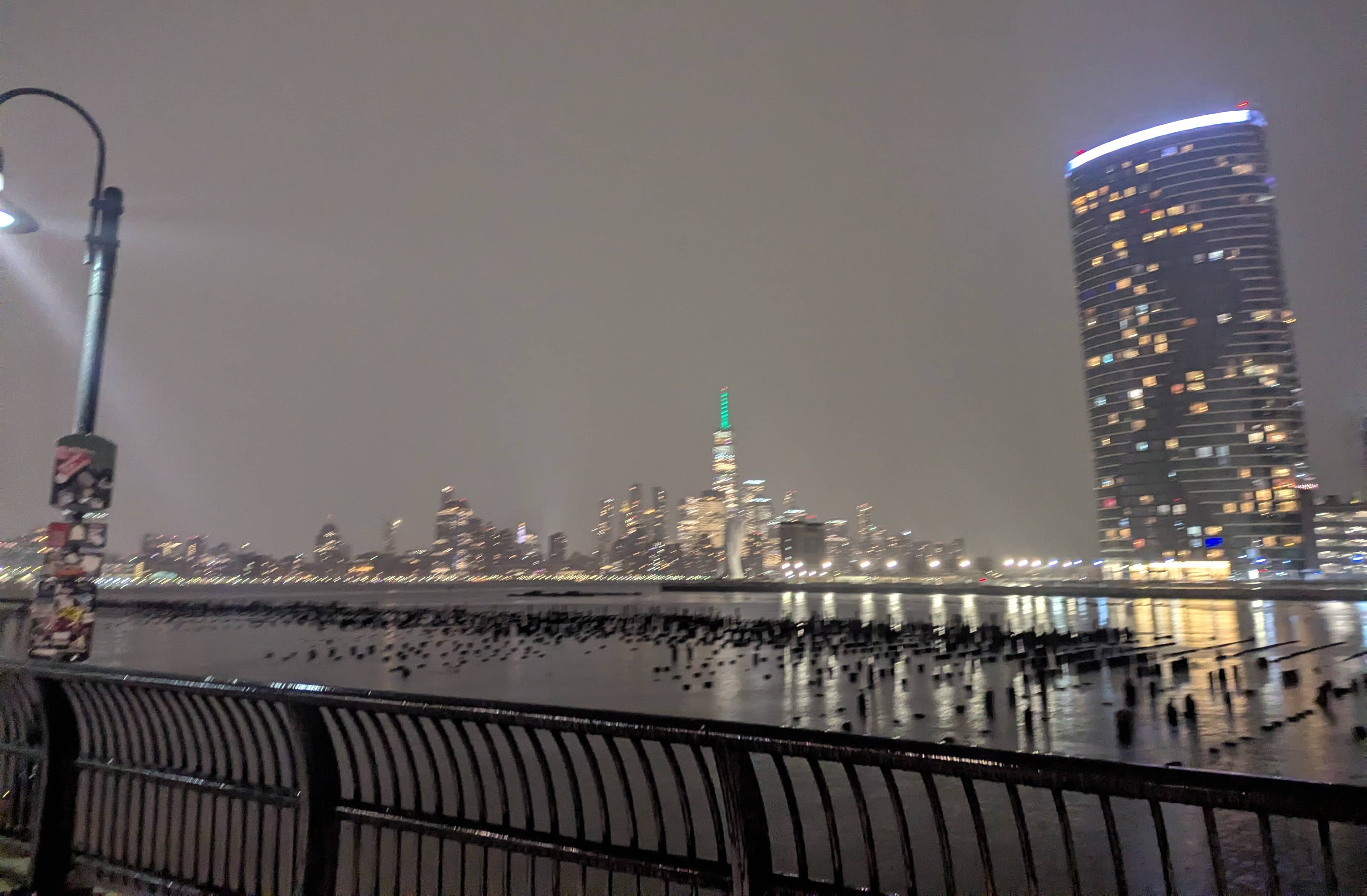
 The list as of Jan 2026.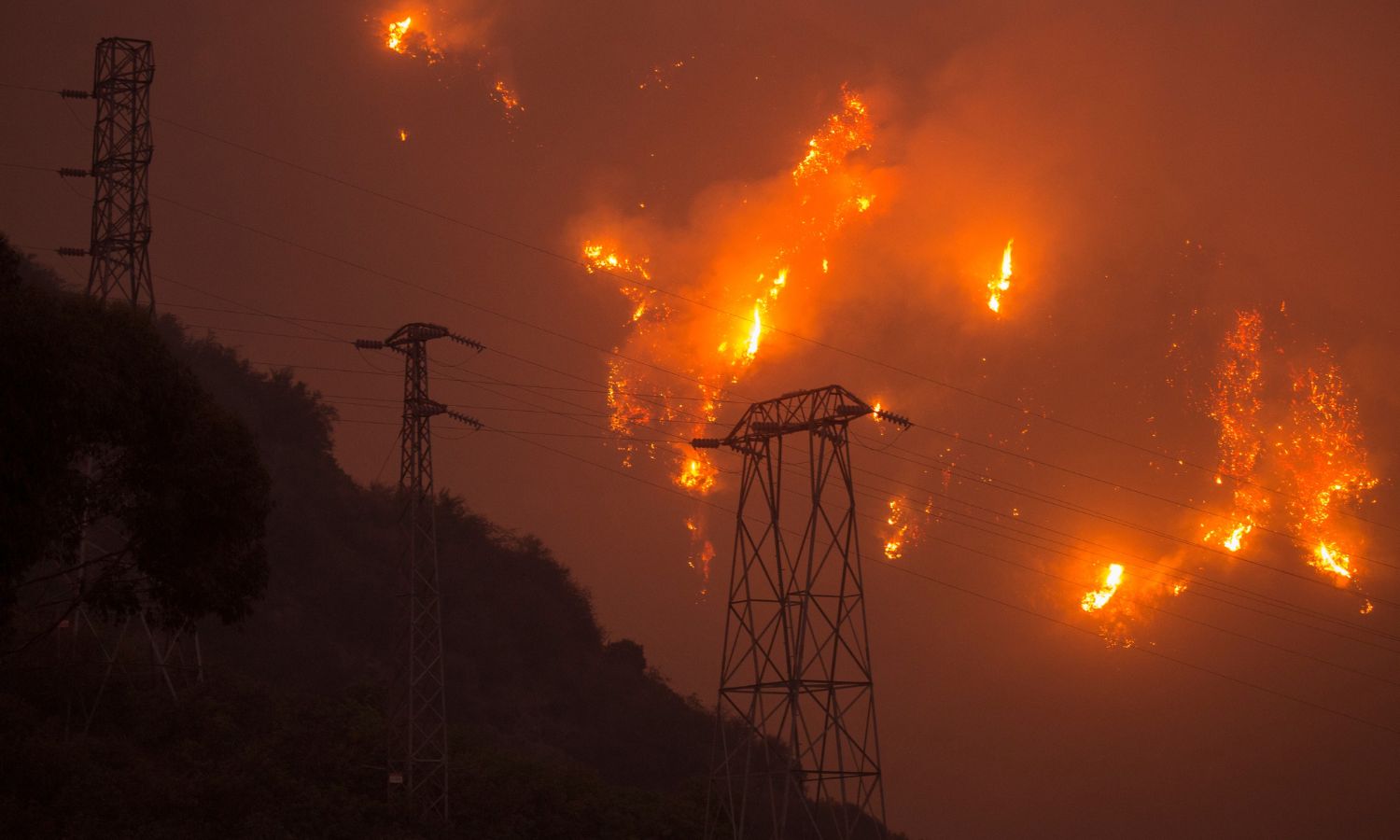
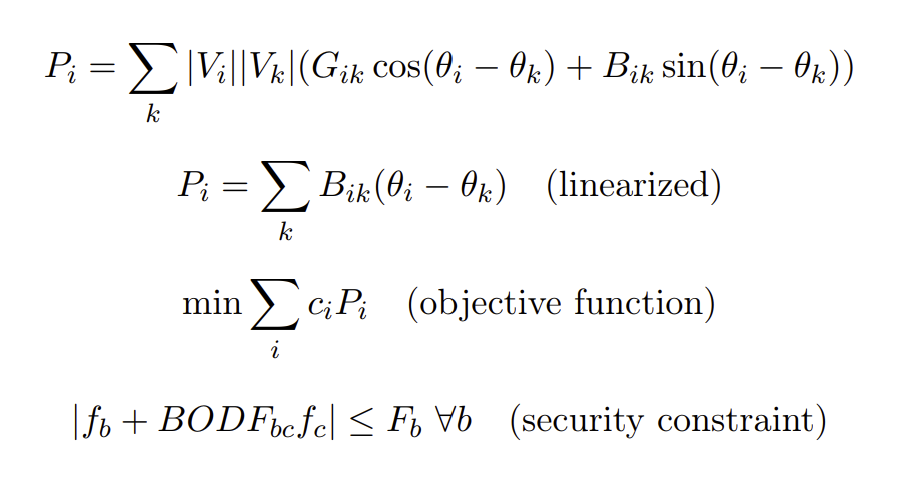 Figure 1: The OPF equations. As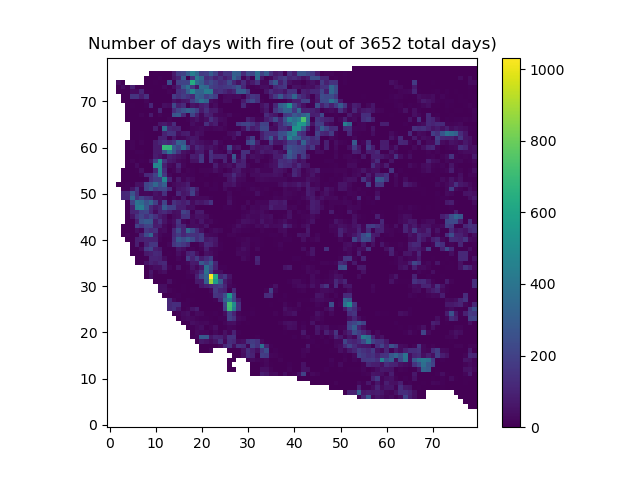
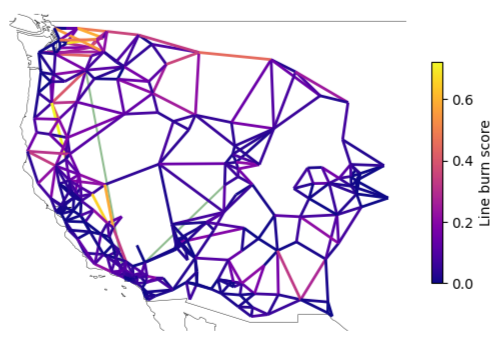
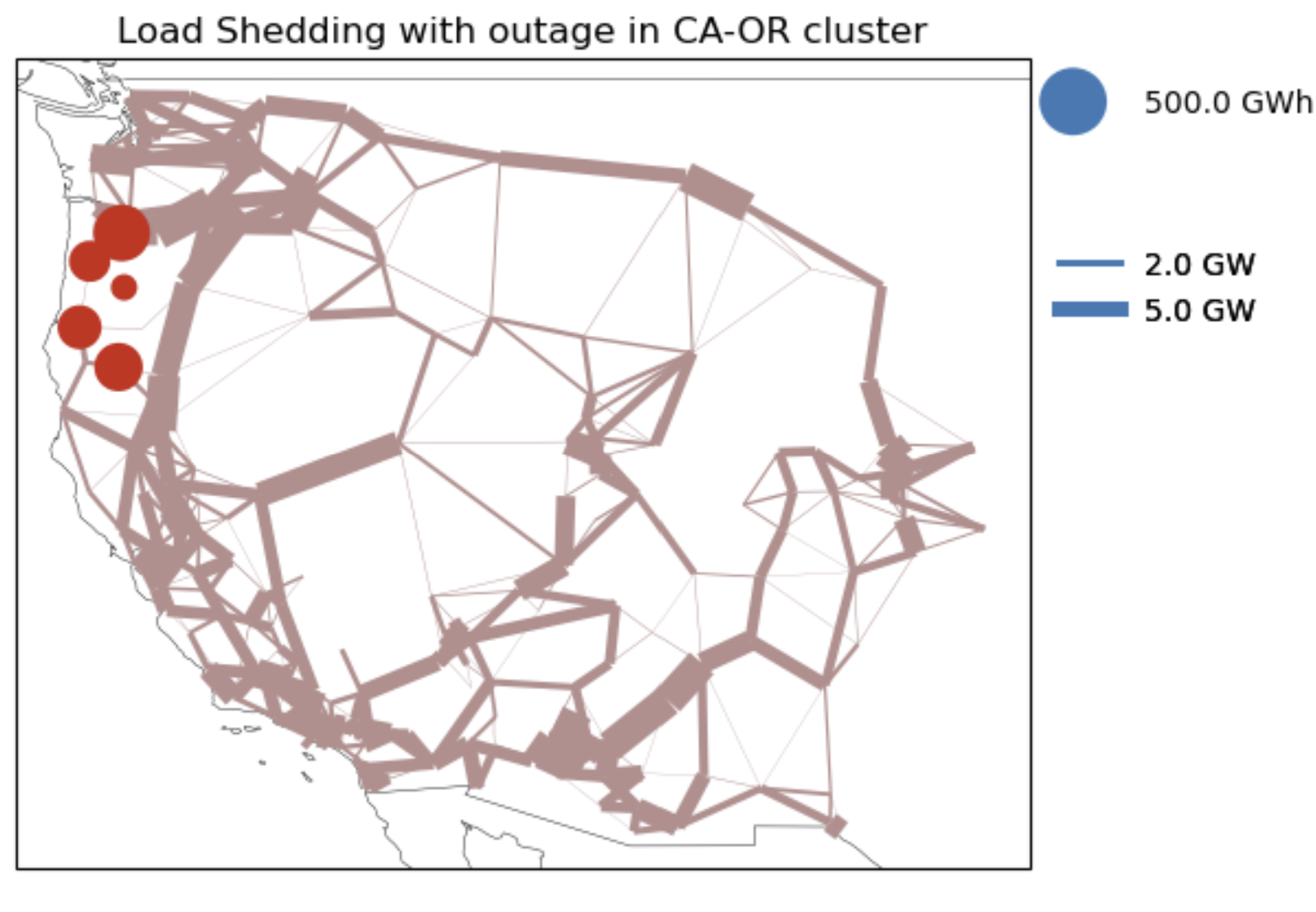
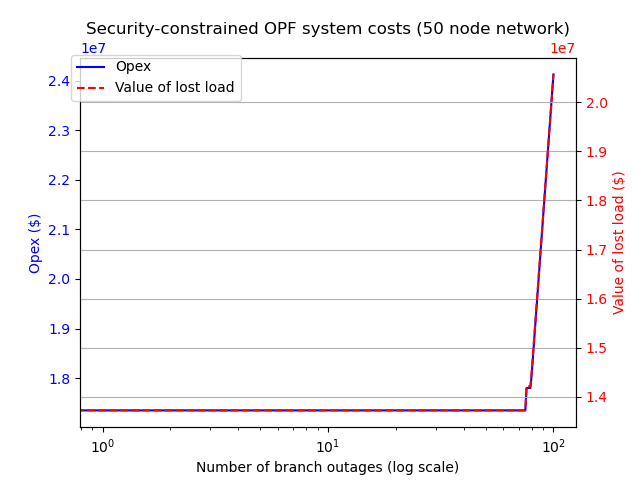 Figure 2: Lost load as a function of number of lines removed. Network size: 50 buses, 100 lines.
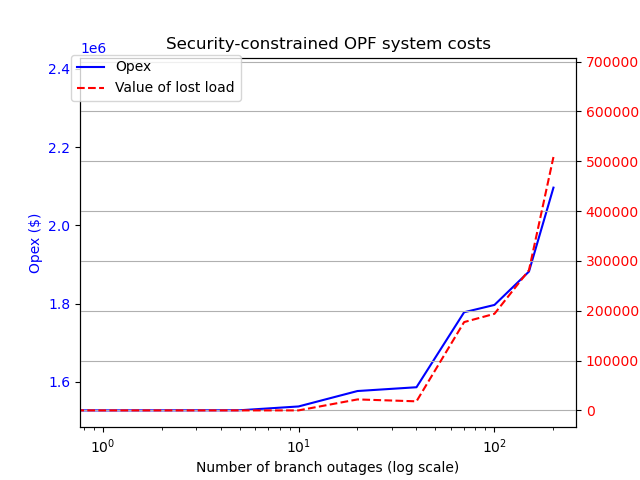 Figure 3: Lost load as a function of number of lines removed. Network size: 100 buses, 500 lines.